Trauma live in the body
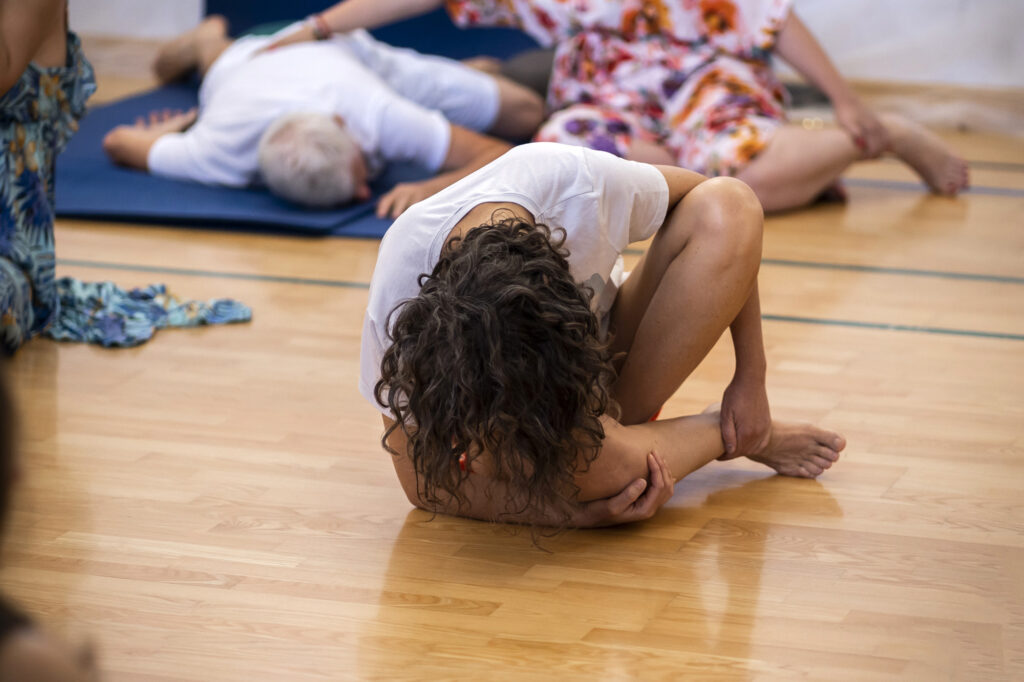
Trauma is not just a memory. It is stored in the body — in breathing, tension, and relational patterns. The body develops adaptive strategies to protect us, but they can later limit spontaneity and connection.
Through a safe and regulated process we learn to reconnect with those layers. The focus is not on reliving, but on gradual integration through safe anchoring, regulation, and presence.
Trauma work is based on knowledge from:
Metode se biraju pažljivo, u skladu s kapacitetom i ritmom osobe.
First step is creating a safe space slow down, breathe, and be in contact without danger. Through safe anchoring we learn:
A sense of safety enables access to deeper layers of experience and the integration of trauma.
Polyvagal theory explains how the nervous system responds to challenges through three states:
Through somatic practices, we learn to regulate transitions between these states and strengthen the capacity for safety and connection.
Work is individualized and tailored. It includes:
The work supports individuals who are experiencing:
The first workshop as an invitation to slip from the world to the body. There is no rush, no expectation, no need to immediately “give”. Through the power of simple movement and deeper activation of the center, we explore what we bring with us and what we no longer need to carry. We work in pairs, in dyads, in silence and in touch. From the inside out. This is a place where you don't have to be good. You're real because you're feel what it means to rest in your own body without tasks, without performance.
After arrival, descend deeper. This afternoon workshop calls for consent to be difficult, to be received by the earth, to be supported by the body. We use breath and gravity as allies. Through floor work, deeper physical pressure, and small waves of release we learn how to empty ourselves to recharge. Eventually we form pods & # 8211; small trust groups that follow us through the entire intensive. The earth does not ask us to ascend. It is enough to descend and regulate through the breath and weight of the body so that you no longer seek stability from the outside, but really feel it within yourself.
In this workshop we lay down the layers, not as an act of courage, but as a return to what was never complex. Through precisely guided physical therapy work, we come into contact with unconscious identifications that guide us like autopilot: I am the one who cares, the one who gives, the one who has to be strong.we use psychodynamic structures, working with testimony, release and regulation, to unravel what we have learned from within to call “I”. Through the body, you become more present for what you should not have shown, and you discover the unconscious roles that hold you in effort and guilt, without having to change. This isn't breaking up with yourself. This is a memory of yourself before all the roles.
This Central Workshop opens a space for contemplation, expansion and integration, not through the mind, but through breath, movement and emptiness. By combining guided meditation, conscious breath and authentic dance, Griet leads us into a state that is neither introspective nor expressive, but pervasive. We learn to listen to the body when we don't make it talk. Breath comes in where words don't know. Movement does not come from an idea, but from silence. This is where real transpersonal psychotherapy happens: the moment when your body becomes the forest, the bird, the wind and all that together becomes you. You're entering a state of deep connection that can't be done by technique but happens when the body lets go of control. There is nothing missing in this silence.
What if the contact doesn't require effort? This workshop restores the interpersonal dimension of the body in its most basic form: play, curiosity and human touch without an agenda. Through spontaneous interactions, contact play, and emotional group regulation, we learn what it means to be seen not because we are special, but because we are available. Lower intensity, more lightness. A space for laughter, touch, eyes that do not seek already offer presence. We use insights from Affective Neuroscience (play, care, seeking) to awaken our gentlest, most played selves. We will experience closeness without effort and drama and learn how contact can feed rather than exhaust. Intimacy doesn't start with pain. It starts in simple: Hey, here I am. You?
There's a place in us that doesn't try to be interesting. He doesn't hide from shame. It's a place that just is. This workshop explores the fine transitions between visibility and retraction. We don't need to be silent, we don't need to be silent. And without ever having to be “someone”. Through carefully structured movements, small rituals of discovery and hiding, we play with the space in between: what happens when you see me? What if you don't know who I am? Can I stand the tenderness of attention without having to prove myself? We push the boundaries between in and out, our own rhythm and common space, and let ourselves be seen exactly where we don't think we have anything to show. We will explore how being seen without noise and calm without avoiding which changes the way you appear in the world. This is not a workshop of expression, but of permission. And that changes everything.
There is a freshness in the ordinary, a space in which nothing has to be proved. This is a place where freedom is not a goal, but a natural sequence of our being. In this workshop we explore how to retain the presence and tenderness we found in intensity as we walk through our days, obligations and demands. Through gentle movements, guided constellations and silent rituals of integration, we find our own paths of maintaining freedom in simplicity. What happens when commonality becomes our ally? How do you stay present in the silence and noise of the world? Can we go through the day with a consciousness that does not seek specialness, but accepts reality as a path to deeper authenticity? This is not an ending, but a gentle beginning. A journey from the space of intensity to the natural rhythm of life.

